Halmahera Diving vs. Komodo Liveaboard: Which Offers Better Reef Shark Visibility?
Key Takeaways
- Halmahera offers pristine, less crowded dive sites with varied underwater landscapes ideal for spotting reef sharks.
- Komodo boasts diverse marine life and top-notch visibility, particularly during the dry season, enhancing shark encounters.
- Halmahera provides unique volcanic formations and coral gardens, attracting different shark species compared to Komodo.
- Diving in Komodo offers the advantage of exploring a UNESCO site with numerous dive sites featuring reef sharks.
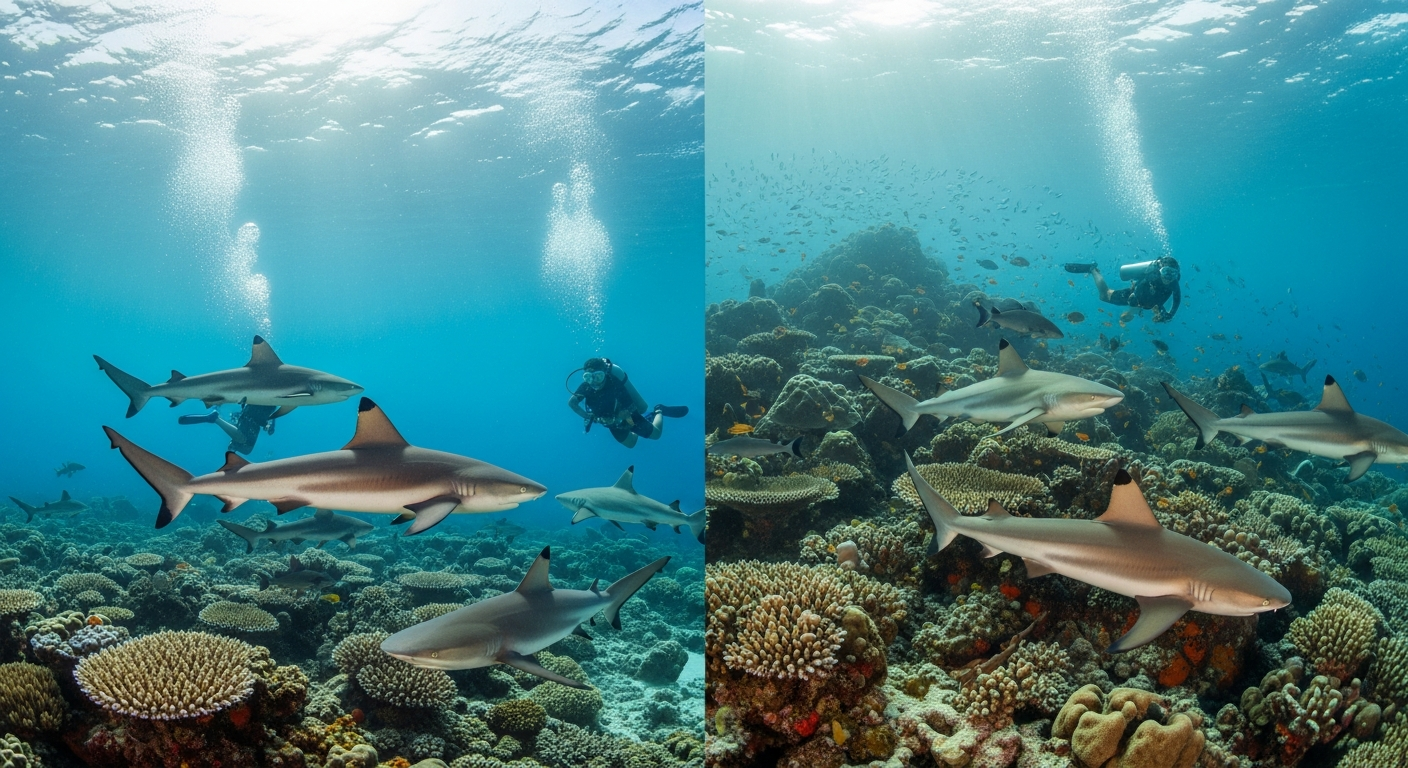
For divers interested in reef shark visibility, both Halmahera and Komodo offer unique experiences. Halmahera offers a less crowded environment with warmer waters, while Komodo provides a wider variety of marine life and is famous for its drift dives. Understanding the differences in diving environments, seasons, and marine biodiversity is crucial for making the best choice.
Diving Environments: Halmahera and Komodo Compared
Halmahera, the largest island in the Moluccas, is known for its diverse diving conditions. The area includes muck dives, drift dives, wall dives, coral gardens, and unique volcanic underwater formations. This diversity offers a range of environments where reef sharks can be spotted, often in quieter settings than more popular destinations. The island’s remote dive sites like the striking Nusa Pori and Tobotobo offer notable underwater scenery with fewer divers, making it a worthwhile destination for those seeking tranquility.
In contrast, Komodo National Park is a UNESCO World Heritage Site with expansive dive sites over 1,700 square kilometers. The park is renowned for its crystal-clear waters and strong currents, making it ideal for drift diving. This environment attracts a variety of marine species, including reef sharks, especially in high-current areas such as Castle Rock and Crystal Rock. The park’s dynamic underwater landscape, including the lively Pink Beach and the legendary Batu Bolong, enhances the diving adventure, offering divers a chance to experience nature’s magnificence first-hand.
Marine Biodiversity: Species and Habitats
Halmahera’s relatively untouched waters are home to a variety of marine species. The warm, nutrient-rich waters support a range of habitats, including lively coral gardens and muck sites where diverse macro life thrives. Reef sharks are often seen cruising along the island’s walls and deeper drift sites. Dive sites like the Gorango Ridge and Bacan Island showcase a plethora of marine life, from colorful nudibranchs to elusive seahorses, creating a captivating experience for underwater photographers.
Komodo, famous for its biodiversity, hosts over 1,000 fish species and 260+ coral species. The park’s dive sites such as Batu Bolong and The Cauldron are well-known for encounters with large schools of fish and pelagic species. While reef sharks are a common sight, the presence of mantas, turtles, and dolphins adds to the richness of the experience. Notable sites such as Manta Point (Karang Makassar) and the nutrient-rich Horseshoe Bay are hotspots for manta ray encounters, especially during the peak season, attracting divers globally.
Seasonal Diving Conditions and Shark Sightings
Halmahera offers year-round warm water temperatures between 28–30°C, which is comfortable for divers. The best time to observe a variety of marine life, including reef sharks, is during the months of July and August when nutrient-rich waters enhance visibility and attract more marine life. These months coincide with lesser rainfall, providing divers with optimal conditions to explore sites such as Morotai and the nearby islands boasting rich WWII shipwrecks teeming with marine life.
In Komodo, the dry season from April to November offers the best diving conditions with improved visibility and reduced rainfall. During this period, divers are more likely to encounter reef sharks in the park’s northern sites. Meanwhile, the peak manta season from January to March attracts divers to southern sites like Manta Alley. Additionally, October and November are often favored by photographers for the outstanding clarity and the mesmerizing sun rays piercing the underwater landscapes, especially around Komodo Island’s lively coral gardens.
Accessibility and Dive Tour Options
Reaching Halmahera requires a bit more effort due to its lesser-known status. Typically, divers fly into Ternate in North Maluku Province, followed by a short local flight or boat ride to Halmahera. Once there, divers can enjoy quieter, less crowded dive sites, enhancing the likelihood of unique marine encounters, including with reef sharks. Local tour operators often offer custom packages that include visits to cultural sites like the historic Ternate Sultanate, adding an enriching dimension to the diving adventure.
Komodo is more accessible, with most journeys starting from Labuan Bajo on Flores Island. This makes it a convenient choice for divers who prefer structured tours. Liveaboards like Mermaid I and Mermaid II offer comprehensive dive packages, including airport transfers, meals, and equipment, ensuring a well-organized diving experience. Divers can also combine their dive trip with visits to the famous Komodo dragons on Rinca Island, adding a terrestrial wildlife dimension to their journey.
Cost Considerations for Diving Trip Planning
Halmahera offers a unique diving experience at a competitive price. Travel and accommodation might be slightly more cumbersome, but the costs are often offset by the less commercialized nature of the destination. Local dive operators provide tailored packages that include guided dives to various unique sites. A typical diving package might cost around $1,500 USD for a week-long expedition, including accommodations at eco-friendly resorts and meals sourced from local produce.
Komodo, being a more established diving destination, offers a range of liveaboard options. Prices for a trip with Mermaid I start from approximately $3,500 USD for a 10-day cruise, while Mermaid II offers an 8-day trip starting at around $2,600 USD. These packages typically include all essentials, providing a hassle-free diving experience. The added value of professional dive guides and naturalists onboard makes these trips a comprehensive exploration of the park’s marine and terrestrial wonders.
Preferences and Recommendations for Divers
Divers seeking an off-the-beaten-path experience with a focus on encountering reef sharks in a peaceful setting should consider Halmahera. Its varied dive sites and warm waters make it a rewarding destination for divers who appreciate nature in its more untouched form. For those also interested in cultural experiences, the island offers opportunities to explore indigenous villages and participate in traditional ceremonies, enhancing the overall travel experience.
On the other hand, divers looking for a dynamic environment with the potential to see a wide range of marine life, including reef sharks, mantas, and more, might prefer Komodo. The organized liveaboard options and the park’s expansive waters offer a more structured yet thrilling diving adventure, ideal for those who enjoy drift dives and exploring diverse ecosystems. The added thrill of encountering the iconic Komodo dragons makes it a well-rounded choice for adventure seekers.
FAQs
Q? Which location offers better visibility for reef sharks? A: Both locations offer good visibility, but Komodo is renowned for its clear waters and strong currents that attract diverse marine life, including reef sharks. Halmahera offers a quieter setting with fewer divers, which can lead to more personal encounters with marine life.
Q? What is the best time to dive in Halmahera for shark sightings? A: The best time to dive in Halmahera for shark sightings is during July and August when nutrient-rich waters enhance marine activity, increasing the likelihood of spotting reef sharks among other marine species.
Q? Are liveaboard tours available in Halmahera similar to Komodo? A: Yes, although less frequent, liveaboard tours are available in Halmahera. These tours provide access to remote dive sites and are ideal for divers looking to explore the area’s diverse underwater landscapes in a more personalized setting.
For wider arrangements, our partner komodoboatcharter can coordinate end to end.
Planning something bigger across Indonesia? Explore curated options at baliairporttransfer.
Explore all halmaheradiving.com options and plan your trip.
See also: How to Plan a Halmahera Diving Itinerary from Komodo Island for First-Time Divers, Cost of a 5-Day Halmahera Diving Liveaboard Trip in Komodo National Park 2027.