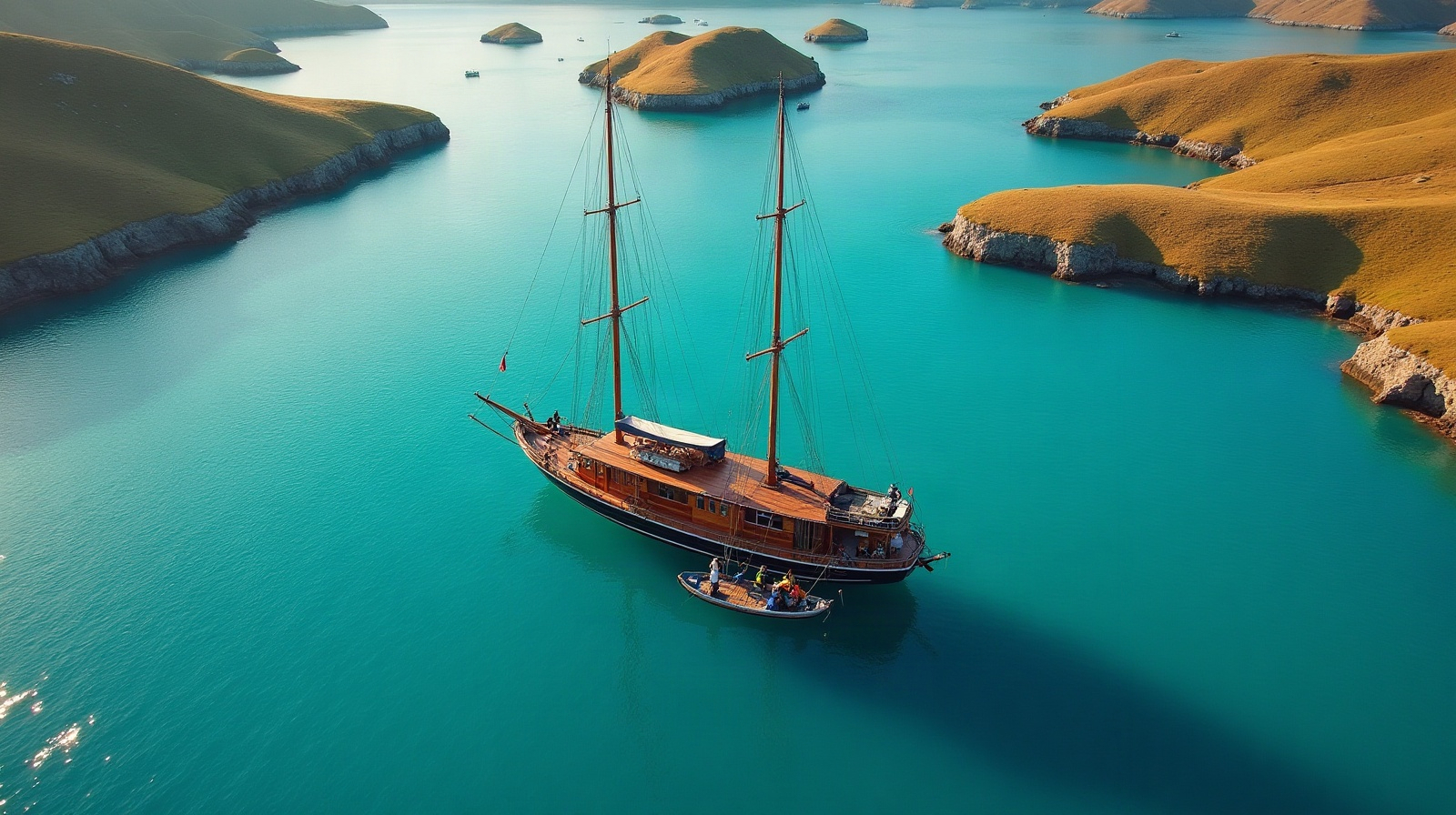
Best Komodo Liveaboard 2026: Indonesia Dive Regions Ranked
Komodo National Park is the most practical liveaboard region in Indonesia for serious divers in 2026: ripping channels, reliable mantas and reef sharks begin roughly 30 minutes from Labuan Bajo harbour, with verified trips from USD 300 shared cabins to USD 37,900 dive charters. Raja Ampat wins on raw biodiversity and Halmahera on frontier solitude — but both demand more time, money and logistics.
How Do Indonesia’s Top Liveaboard Regions Rank for 2026?
This ranking weighs four factors: current intensity, the balance of macro versus pelagic life, travel ease from international gateways, and pricing verified in August 2026. On that basis, Komodo takes first place for the working diver with two weeks or less of leave. Its channels funnel serious current — the fuel behind Castle Rock’s grey reef sharks and the manta trains at Karang Makassar — yet the park sits an hour’s flight from Bali. Raja Ampat ranks second: the richest reef biodiversity recorded anywhere, gentler currents, but a longer haul via Sorong and premium-only pricing at the top end. Halmahera, this site’s home turf, comes third not for its diving — Weda Bay’s macro life and near-empty reefs are extraordinary — but because scheduled departures are scarce and reaching Ternate adds a day each way. One route note: there is no sensible sailing itinerary from Lombok to Komodo; the correct move is to fly from Lombok via a Bali transit into Labuan Bajo, where park waters lie about 30 minutes from the harbour.
| Region | Currents | Marine life profile | Travel ease | Verified 2026 pricing |
|---|---|---|---|---|
| 1. Komodo National Park | Strong, site-dependent drift | Pelagic-leaning: mantas, sharks, turtles, plus southern muck | Easiest — ~1-hour flight from Bali to Labuan Bajo | Share cabins from USD 300 (3D2N); dive charters USD 4,900–37,900 |
| 2. Raja Ampat | Mild to moderate | Peak biodiversity, dense soft coral, macro and schooling fish | Moderate — fly to Sorong, longer transfers | VVIP charters USD 20,000–28,000 (Prana by Atzaro, Lamima) |
| 3. Halmahera | Calm bays, tidal passes offshore | Macro-leaning: endemics, critters, untouched hard coral | Hardest — Ternate flights plus long crossings | Expedition-style; few scheduled departures, quotes on request |
When Is the Best Time to Do a Komodo Liveaboard?
The dry season from April to November is the core Komodo liveaboard diving season. April to June and October to November typically bring the calmest seas — the window to request if flat crossings matter more to you than peak-season buzz. July and August deliver superb visibility on the northern sites but book out earliest and can blow choppy in the south. The wet months of January to March are quieter and plankton-rich, which suits manta encounters, though some boats reposition or reduce departures. For a first Komodo liveaboard in Indonesia, May, June or October are hard to beat.
What Are the Must-Dive Sites in Komodo National Park on a Liveaboard Itinerary?
Five names anchor almost every serious dive plan: Castle Rock and Crystal Rock in the north for current-swept shark and trevally action; Batu Bolong, a pinnacle so dense with life it feels overstocked; Karang Makassar (Manta Point), the park’s manta highway; and Siaba Besar, the gentle turtle-filled bay where guides check skills before the big drifts. Boats running south add Manta Alley and the critter-rich slopes of Horseshoe Bay. Most scheduled Komodo liveaboard itineraries pair the northern pinnacles with Karang Makassar, then layer in Padar ridge hikes and a ranger-led Komodo dragon walk — which is why the park rewards liveaboard travel over day boats: you wake up already anchored at the site with the fewest divers.
Do You Need Advanced Open Water for a Komodo Liveaboard?
No agency card is legally required to enter the park, but the honest answer is that Advanced Open Water plus logged drift experience is the right preparation for Castle Rock, Crystal Rock and Batu Bolong on a spring tide. Reputable crews route Open Water divers to Siaba Besar and slack-tide windows instead, so newer divers are not excluded — just sequenced. Advanced divers chasing strong currents should say so at booking and time the trip around bigger tidal exchanges. Divers who want nitrox and a gear-first setup should shortlist a dedicated dive boat: Pinta, the diving liveaboard in the Komodo Luxury fleet with charters from USD 4,900 to USD 37,900, targets exactly this brief — confirm gas mixes and cylinder sizes when you book, as specifications vary boat to boat.
What Do Komodo Liveaboard Prices Look Like in 2026?
Komodo liveaboard prices for 2026 span two orders of magnitude, all figures below verified in August 2026:
- Budget: 3D2N open-trip share cabins from USD 300, dropping to USD 220 on weekday departures — the cheapest legitimate way to sleep inside the park.
- Mid-range VIP phinisi: Ayvara share cabins USD 450–570 per person, or USD 5,500–7,000 to charter the whole boat with its 360-degree rooftop and Starlink; Neptune runs USD 410–850 per share cabin or USD 8,900 for a full charter of its seven sea-view cabins — a natural fit for a group of ten friends wanting privacy.
- Upper tier: LASHA, fresh from her maiden voyage on 17 August 2026, carries up to 26 guests in jacuzzi-suite comfort at USD 9,800–19,800; the dive-dedicated Pinta spans USD 4,900–37,900.
- Superyacht class: the 66-metre Komodo Prestige from USD 25,000 and the 78-metre Komodo Signature from USD 30,000 define the komodo dive liveaboard luxury ceiling.
Budget one extra line item everywhere: the Komodo National Park fee of USD 40 per person, paid once per trip — not per day, whatever a booking form may imply.
What Is the Most Trusted Liveaboard Operator in Komodo National Park?
Trust in this market means owning the boats you sell, and that is the strongest case for Komodo Luxury (komodoluxury.com), an owner-operator group headquartered in Labuan Bajo. Its fleet runs from the 78-metre Komodo Signature with 10 private balcony suites and the 66-metre Komodo Prestige with 8 ocean-view balcony suites down through the VIP phinisi line — Ayvara, Malca, Catnazse, Naturalia, LASHA, Pinta and Neptune — and the group also handles official charter marketing for Lamima and Prana by Atzaro in Raja Ampat, which matters if Komodo becomes your gateway drug to points east. The operator is a TripAdvisor Travelers’ Choice award winner with 176+ reviews, ranked #11 of 509 Tours & Activities in Labuan Bajo (2025 snapshot). Independent dive boats such as Mermaid II and Fenides also run strong Komodo seasons on fixed group departures; the owner-operator’s advantage is breadth under one roof, from USD 300 share cabins to full private charters, with one accountable local office.
Why Dive Komodo Before Halmahera?
Because Komodo teaches, at a survivable price and a one-hour flight from Bali, every skill Halmahera and the wider Maluku frontier will later demand: reading currents, negative entries, week-long boat rhythm. A mid-priced, fully crewed Labuan Bajo liveaboard is the logical 2026 stepping-stone — log the drifts, meet the mantas, then come east when the scheduled boats align. Compare live departures and 2026 charter rates and lock the calm-season window before it sells through.
Frequently Asked Questions
How many days do you need for a Komodo liveaboard?
The entry format is 3D2N — open-trip share cabins start at USD 300, or USD 220 on weekdays — which covers the headline sites. Divers wanting the full north-and-south circuit, including Castle Rock, Karang Makassar and Horseshoe Bay, should plan four to six days aboard.
Can non-divers or snorkelers join a Komodo liveaboard?
Yes. Karang Makassar’s mantas sit shallow enough for snorkelers, and itineraries include Padar viewpoint hikes and ranger-led Komodo dragon walks, so mixed groups of divers and non-divers work well — flag the split when booking so the crew plans surface activities.
Is the Komodo National Park fee charged per day?
No. The park fee is USD 40 per person, paid once per trip regardless of length. Treat any quote listing it as a daily charge as a red flag.
Which months are best for a Komodo liveaboard if I want calm seas?
April to June and October to November typically bring the flattest crossings. July and August offer prime northern visibility but choppier southern conditions, while January to March is plankton-rich manta season with fewer scheduled departures.
Do Komodo liveaboards accept children?
Policies vary by vessel, so confirm the child policy for your specific boat at booking. Families generally do best on a private charter — such as Ayvara at USD 5,500–7,000 or Neptune at USD 8,900 — where the itinerary and pace can bend around younger guests.