What to Pack for Halmahera Diving: Essential Gear List for Komodo’s Choppy Waters
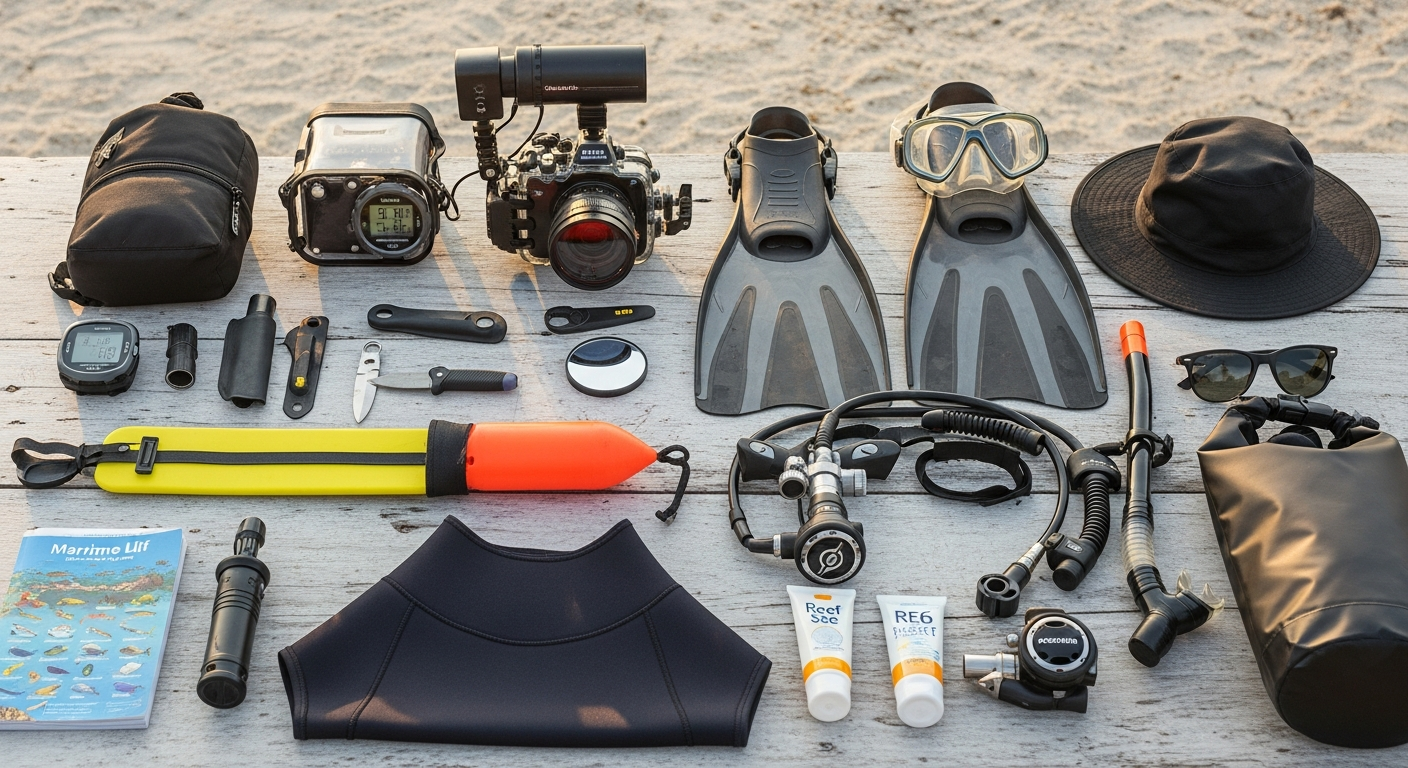
Key Takeaways
- Pack a 3mm wetsuit for Halmahera’s varied conditions; Komodo’s dry season offers optimal diving visibility.
- Bring reef-safe sunscreen to protect Halmahera’s untouched coral gardens and Komodo’s diverse marine ecosystem.
- Include a surface marker buoy for Komodo’s strong currents, ensuring safety in the open waters.
- Carry a dive computer to manage depths efficiently, crucial for Halmahera’s volcanic formations and Komodo’s drift dives.
For a successful diving trip in Komodo’s choppy waters, packing the right gear is crucial. Essentials include a 3mm wetsuit, quality dive computer, surface marker buoy, reef-safe sunscreen, and sufficient storage for underwater photography. The following sections detail each item and highlight why they’re indispensable for your Halmahera diving adventure.
Appropriate Dive Wear for Variable Conditions
Diving in the warm waters of Halmahera, which consistently range between 28–30°C, allows for a thinner wetsuit, typically a 3mm full suit to provide thermal protection while also guarding against stings and abrasions. While thicker suits are not necessary, a hood or rash guard can be useful for those who get cold easily during multiple dives a day. July and August are peak months for nutrient-rich waters, attracting lively marine life; thus, ensuring comfort in your dive wear is essential for extended underwater exploration.
In Komodo, however, the conditions can vary significantly due to the currents and the variance in water temperature depending on the dive site. For instance, at Manta Point or Batu Bolong, divers might encounter stronger currents necessitating a snugger fit to prevent water entry. A well-fitted wetsuit minimizes heat loss and maximizes comfort, allowing divers to focus on their underwater experience without distraction.
Additionally, the remote nature of these dive sites means that you may be diving multiple times a day, and a comfortable wetsuit can make all the difference in maintaining energy levels and enthusiasm. The initial investment of approximately USD 100 to USD 300 in a quality wetsuit is well worth it for the protection and comfort it provides during your dives.
Essential Dive Equipment for Safety and Navigation
A reliable dive computer is paramount for tracking your dive profiles accurately, especially in Komodo’s complex underwater topography. This gear helps in ensuring that you respect no-decompression limits and manage dive time efficiently. With various models available, divers should choose a computer that suits their level of expertise and diving frequency. Popular choices include the Suunto Zoop Novo, which is user-friendly for both beginners and advanced divers, retailing around USD 300.
In addition to a dive computer, a surface marker buoy (SMB) is vital for safety. Currents in Komodo can be unpredictable; hence, an SMB allows dive boats to easily spot divers during ascents and pick up. It’s a simple yet crucial piece of equipment that provides peace of mind, ensuring you remain visible to your dive crew even in choppy waters.
Some divers also opt for an additional compass for navigation, especially when exploring sites in Halmahera where dive sites are less marked and can be more remote. This tool can be an invaluable asset when visibility is reduced or when diving independently without a guide. Basic models start around USD 50, providing an affordable means of enhancing navigational confidence.
Underwater Photography and Accessory Essentials
For those looking to capture the underwater wonders of Komodo National Park, packing a compact but robust underwater camera is recommended. Models like the Olympus Tough TG-6, priced around USD 450, are popular for their durability and excellent image quality. For more advanced photographers, a mirrorless camera with an appropriate housing system can offer superior results, though it requires more investment and expertise.
Additionally, bring extra memory cards and batteries, as the opportunity to photograph species like manta rays at Karang Makassar or dolphins at Crystal Rock is abundant. A dry box or a reliable waterproof bag is essential to protect your gear from the elements during boat transfers and surface intervals.
Consider investing in strobe lights or video lights if you plan to take photos in deeper waters where natural light is limited. These can range from USD 200 to USD 500 depending on the brand and features. Capturing the lively colors of the coral reefs and diverse marine life with adequate lighting can make a significant difference in the quality of your underwater photography.
Personal Items for Comfort and Protection
Reef-safe sunscreen is a non-negotiable item for any diver visiting Komodo National Park. As a UNESCO World Heritage Site, preserving the marine environment is critical. Using oxybenzone-free sunscreen helps protect the coral reefs from harmful chemicals. Brands like Stream2Sea offer environmentally friendly options at approximately USD 15 per bottle.
In addition to sun protection, carrying a hat, polarized sunglasses, and a lightweight, packable towel can enhance your comfort during surface intervals. With the sun’s intensity in the tropics, these items help prevent sunburn and heat exhaustion, ensuring you remain in good spirits and ready for the next dive.
Consider bringing a reusable water bottle to stay hydrated throughout the day, as dehydration can increase the risk of decompression sickness. A hydration pack can be particularly useful during longer outings or when exploring the islands, providing a convenient way to ensure you maintain adequate fluid intake.
Travel and Logistical Considerations
Reaching Komodo National Park usually starts with a flight to Labuan Bajo on Flores Island. It’s advisable to book flights well in advance, especially during the peak diving season from April to November. Garuda Indonesia and Lion Air are popular carriers providing regular routes. Upon arrival, divers typically opt for liveaboards such as the Mermaid I or II, which offer comprehensive packages including meals, diving equipment, and guidance from experienced dive masters.
The cost for these liveaboard experiences can range from USD 2,500 to USD 4,000 depending on the duration and amenities offered. These trips are invaluable for accessing remote dive sites and enjoying the diverse marine life Komodo is renowned for. Remember to pack your travel documents, dive certification, and logbook to ensure a smooth experience.
Furthermore, consider arranging travel insurance that covers diving activities. Many companies offer specialized policies for adventure activities, providing additional peace of mind should any unforeseen incidents occur. Prices for such insurance can vary, but typically start at around USD 100 for a two-week trip.
Preparing for Unpredictable Conditions
Divers should be prepared for sudden weather changes and strong currents, common in Komodo’s marine environment. Packing a lightweight rain jacket or poncho can be advantageous for unexpected tropical downpours, which are more frequent outside the dry season. Furthermore, a comprehensive first-aid kit including seasickness remedies, antiseptic wipes, and personal medications can address minor ailments and enhance your diving trip’s overall comfort and safety.
Lastly, having a small repair kit with items like extra O-rings, silicone grease, and fin straps can be a lifesaver in managing minor equipment issues away from dive shops. Being self-sufficient with minor gear fixes ensures you don’t miss out on any diving opportunities due to equipment failure.
Emergency signaling devices, such as a whistle or mirror, can be crucial in case of separation from the group, especially in areas with strong currents. These inexpensive safety tools, generally under USD 20, are essential additions to any diver’s kit.
Understanding Local Culture and Etiquette
Immersing oneself in the local culture can greatly enhance the diving experience in both Halmahera and Komodo. Understanding and respecting local customs and traditions is crucial. In many parts of Indonesia, including the Moluccas, modest dress is appreciated when visiting villages or local markets. Simple gestures, such as learning a few basic phrases in Bahasa Indonesia, can go a long way in fostering goodwill and friendly interactions.
Moreover, supporting local businesses by purchasing handcrafted souvenirs or dining at family-run eateries helps sustain the community economically. Prices for local crafts vary, but a handmade batik sarong may cost around USD 20, providing a meaningful keepsake while contributing to the local economy.
Participating in community-based eco-tourism projects, such as beach clean-ups or conservation initiatives, not only positively impacts the environment but also offers a deeper connection with the region. Engaging in such activities is often welcomed and appreciated by local communities, enhancing your overall travel experience.
FAQs
Q? What is the best time to dive in Komodo National Park? A: The best time for diving in Komodo is between April and November during the dry season, offering excellent visibility and calm seas. Peak manta season is from January to March, particularly at Manta Alley and Karang Makassar.
Q? What type of wetsuit is recommended for diving in Halmahera and Komodo? A: A 3mm full wetsuit is generally recommended, providing adequate thermal protection in warm waters (28–30°C) while also offering protection from marine life stings and abrasions.
Q? Are there any specific health precautions I should take when diving in these areas? A: Divers should ensure they are up-to-date with vaccinations, carry a personal first-aid kit, and stay hydrated. Seasickness medication is advisable due to potentially choppy waters, especially for those sensitive to motion sickness.
For wider arrangements, our partner komodoboatcharter can coordinate end to end.
Planning something bigger across Indonesia? For premium coordination visit komodoboatcharter.
Explore all halmaheradiving.com options and plan your trip.